11,000,000 KRW(Approx. 6,875.00 USD)
Concept
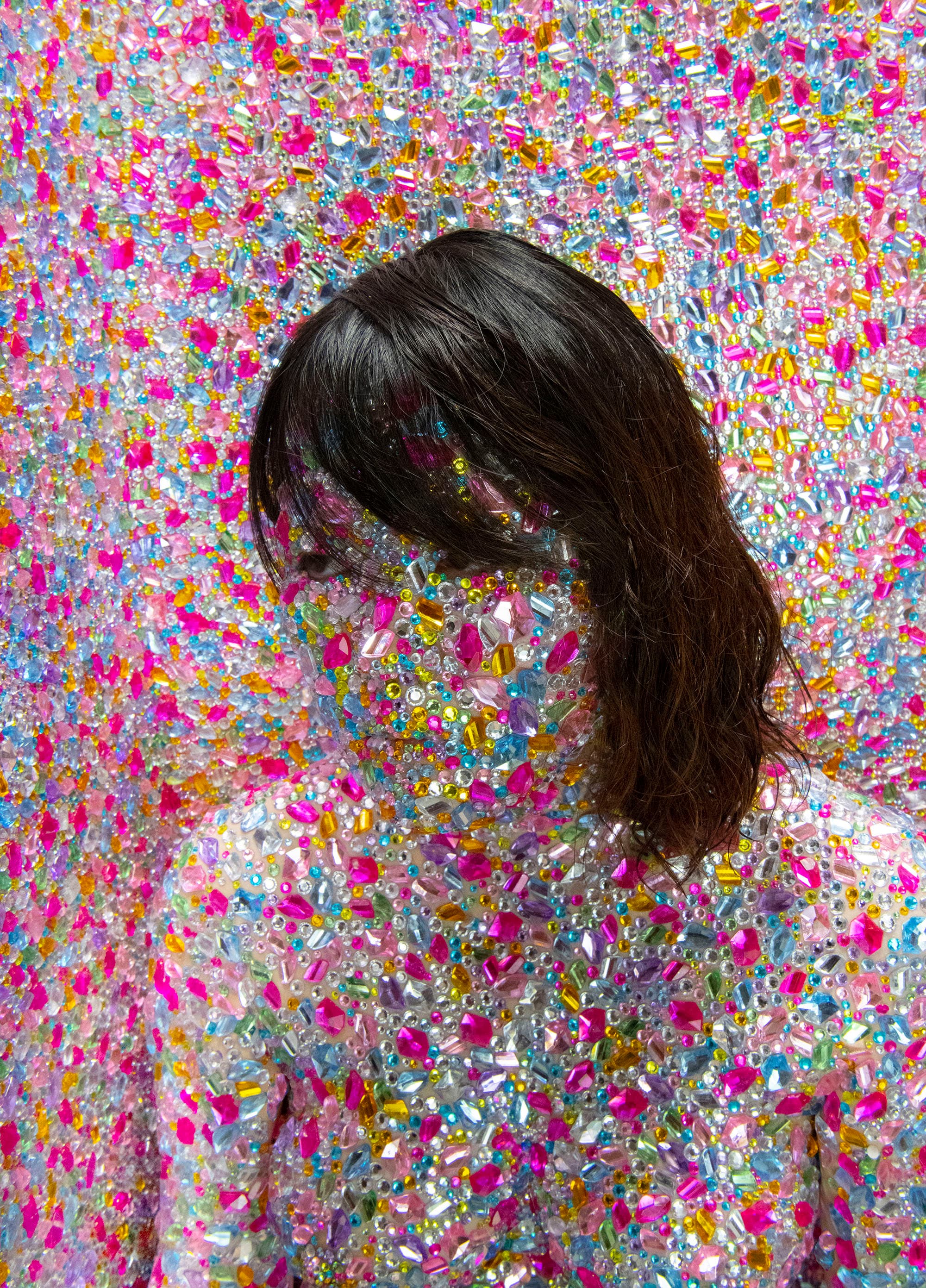
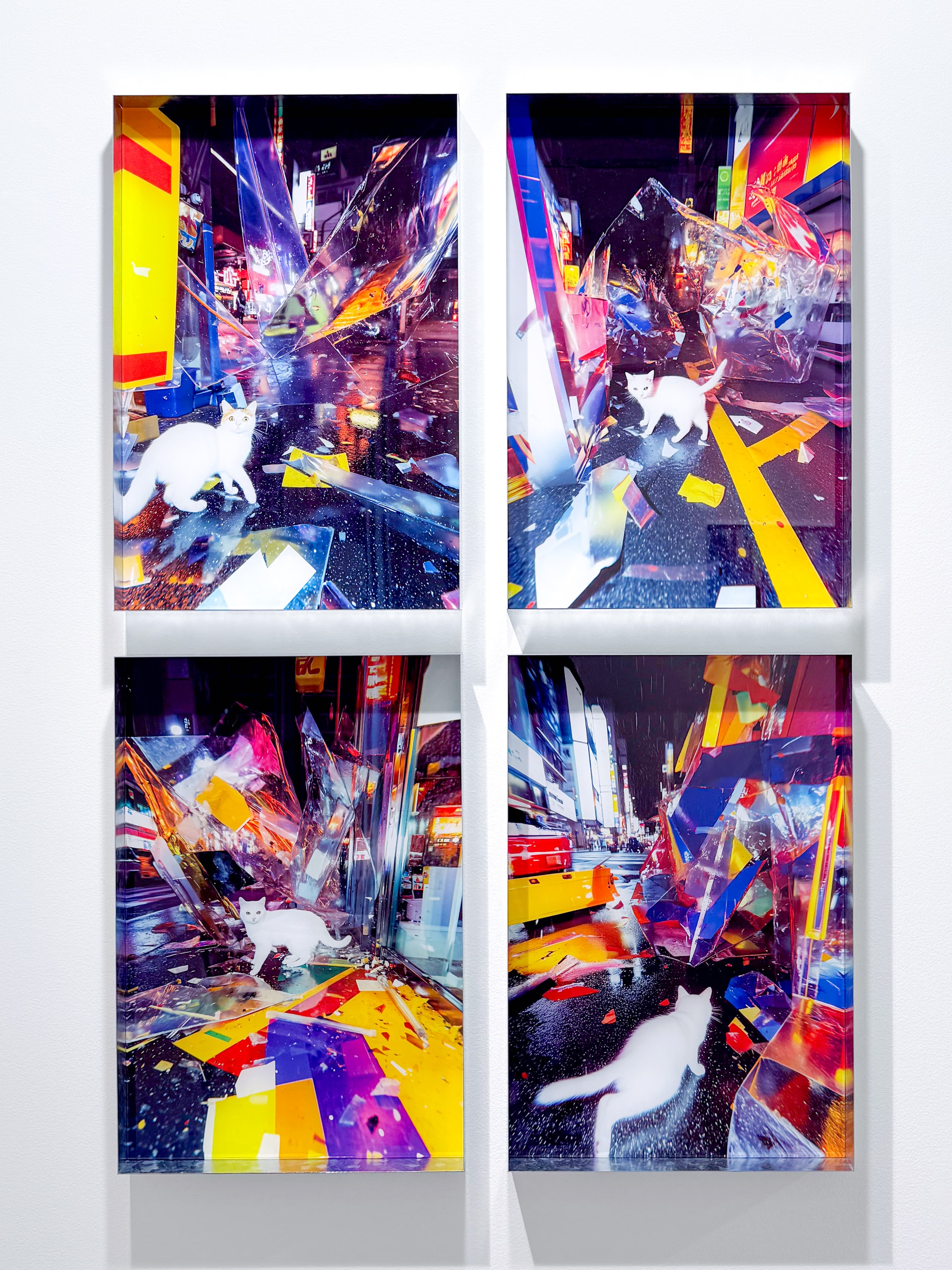
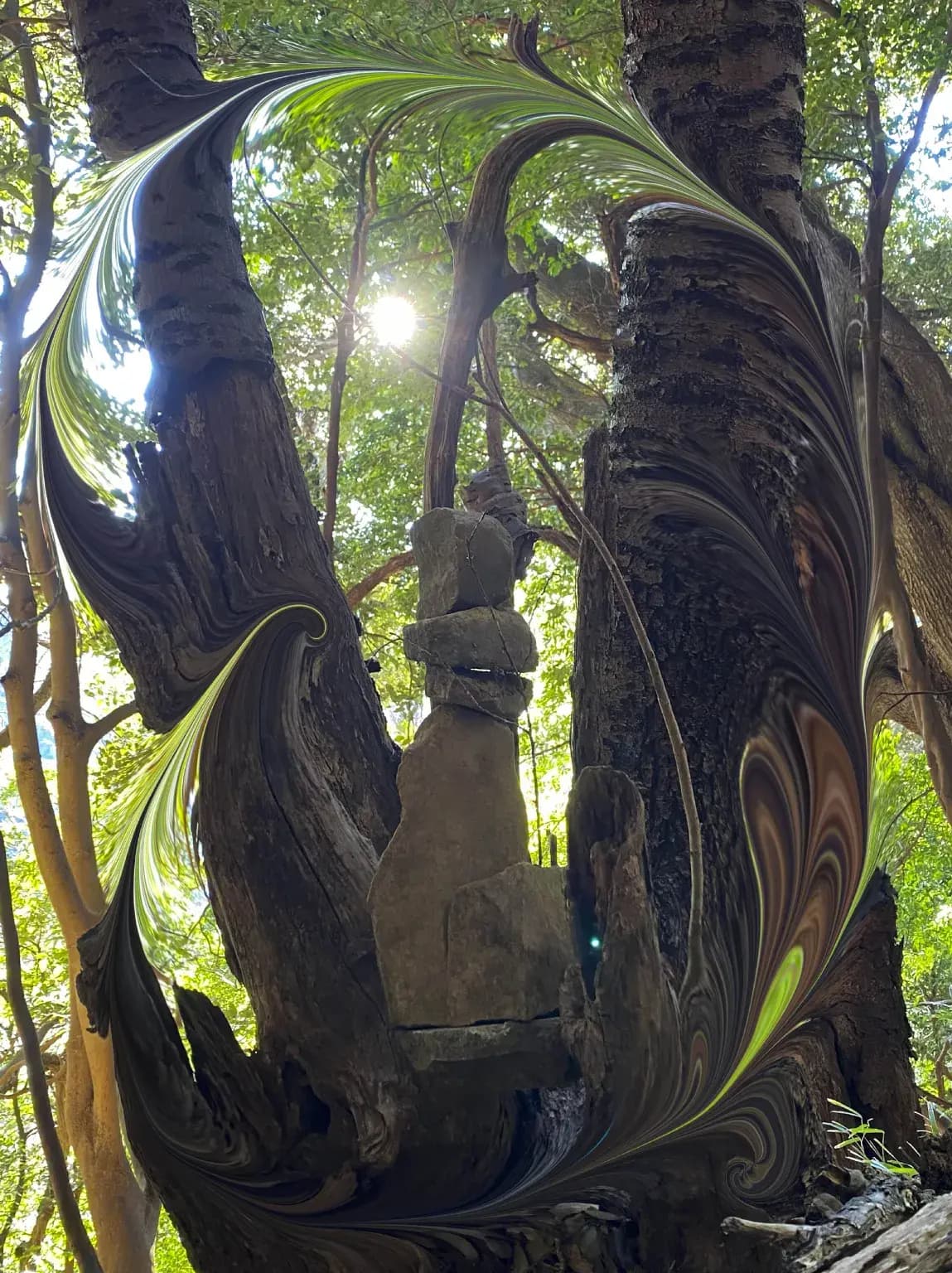
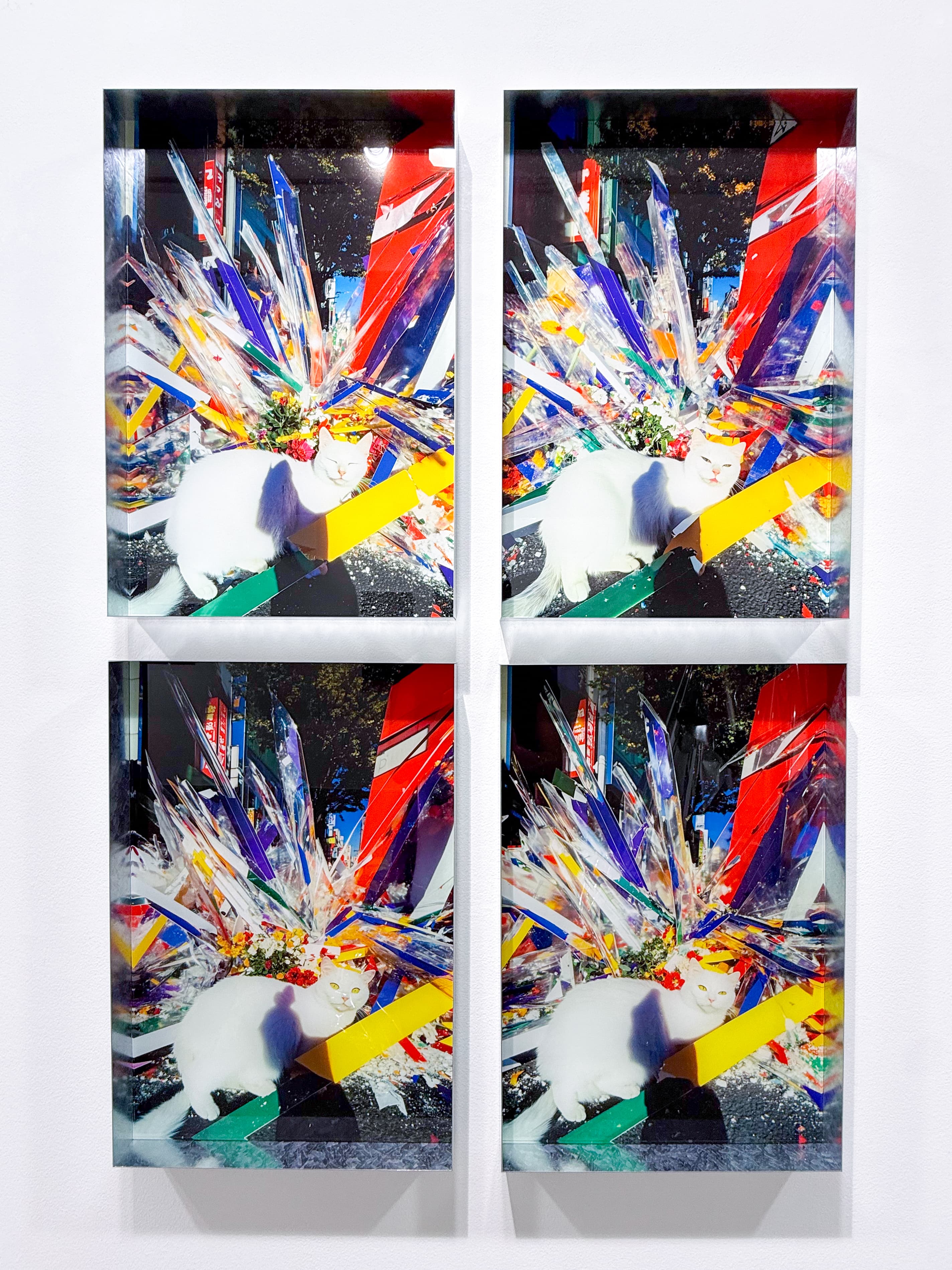
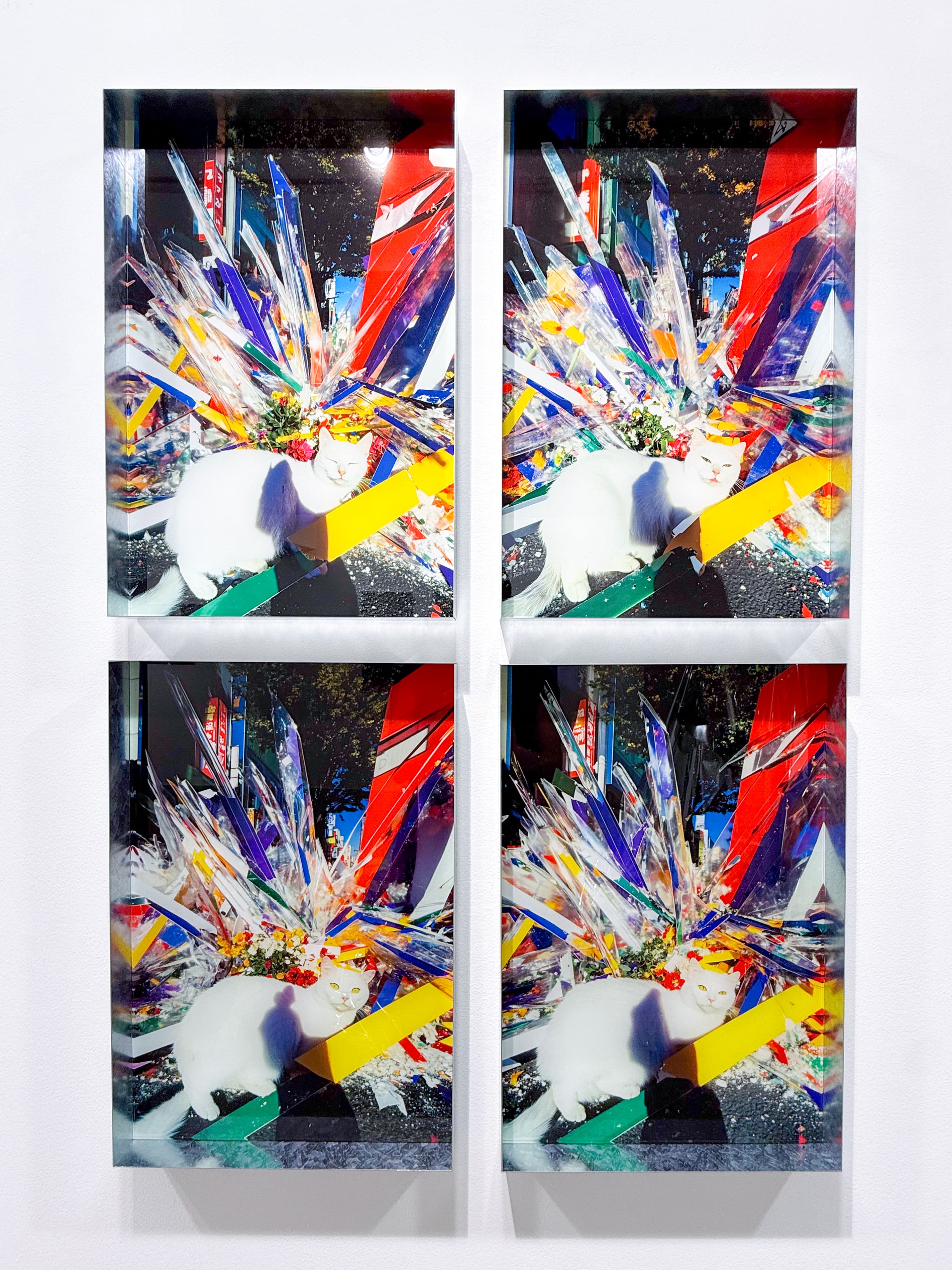
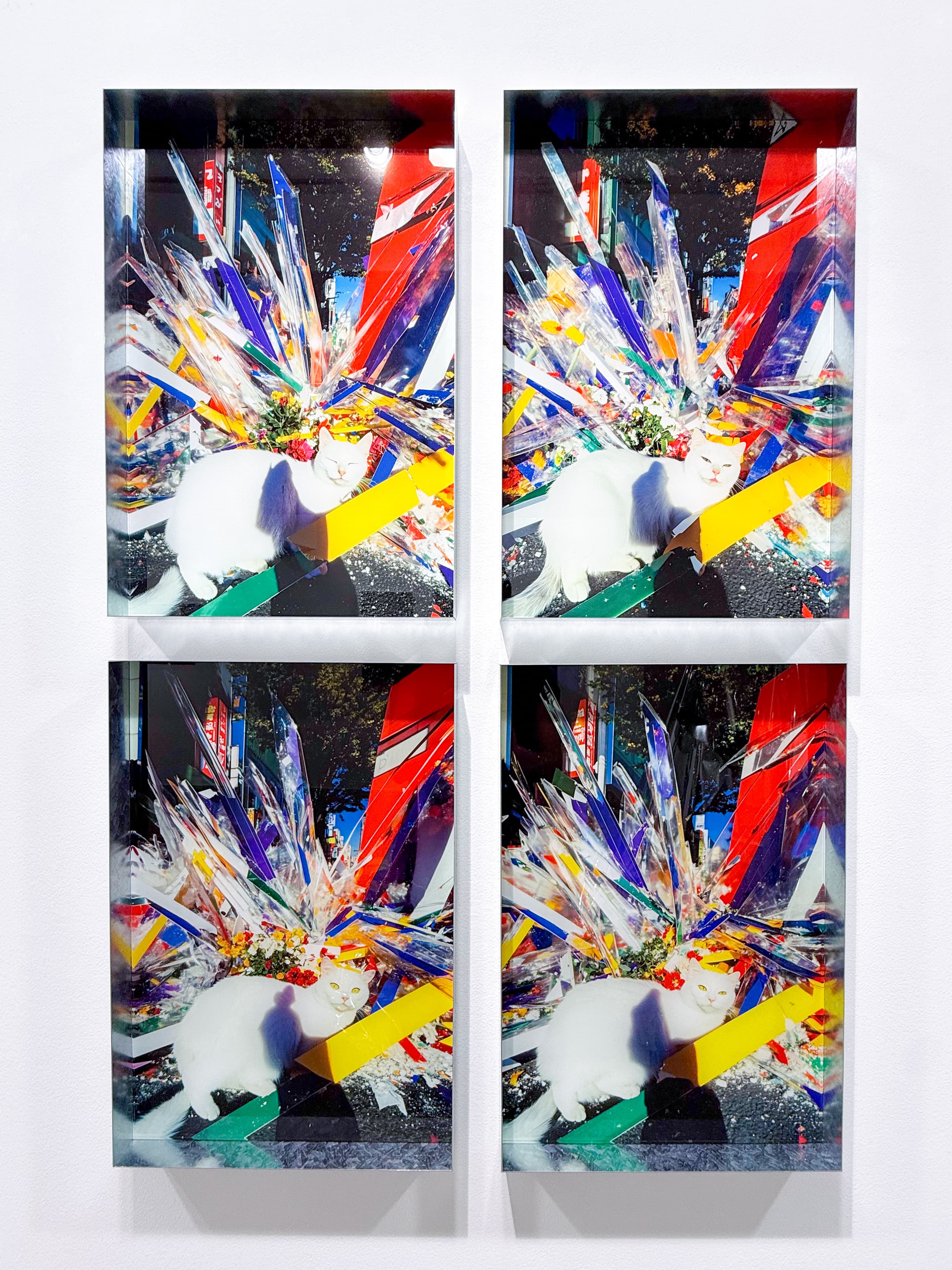
In this series, Kenta Kobayashi feeds his existing photographs, CG works, and digitally manipulated pieces into generative AI, then overlays images of cats, flowers, and Tokyo’s urban landscape to create new visual compositions. The source materials include [[Smudge (2013–)], which uses Photoshop’s Smudge tool to stretch the colors of photographs; [[Tokyo Débris (2022–)], which fragments urban photographs and past works within a 3D CG space; [[Broken Mirrors (2020–)], which deals with mirrors and reflections; and straight photography. The artist primarily uses Midjourney for production. Rather than giving the AI detailed instructions through complex descriptions, the artist feeds their personal archive as a mood board and provides short prompts such as “Tokyo Debris with Cat” or “Tokyo Debris with Flowers.” The AI does not interpret past works in a human-like manner but reads them as visual characteristics—such as color, fragments, reflections, strokes, and glass-like textures—and often misreads them. In this series, these misreadings are treated not as failures, but as events in which the work steps outside the artist’s own perspective and is reinterpreted through a different perception. The still-image works incorporate Midjourney’s UI structure, which generates four candidate images at once, and are presented as a four-part series. The four images, born from the same starting point, are similar yet not identical. Here, issues inherent to the photographic edition system—such as reproducibility, selection, and the absence of the original—are reimagined through the interface of the AI era. For the exhibition, the generated images were mounted on acrylic and presented within tin frames. By placing these AI-generated images in physical space not merely as on-screen data, but as photographic objects possessing gloss, reflection, weight, and an industrial texture, a new texture emerges between the immaterial generated image and the material support.
Inspiration
In the age of AI, I seek to explore where artistic agency resides. By having AI reference my past works, self-imitation, othering, and reinterpretation occur simultaneously. In that moment, AI behaves not merely as an external tool, but as a mirror that re-reads my artistic history through a different lens. The title “copycat” refers to AI as an imitator, while also connecting to the artist’s own personal history of imitation and aspiration. Copies are treated not as identities, but as divergences that continuously generate discrepancies. The concept stems from the sense that generative AI might enable a reinterpretation of my own past works. Series such as “Smudge,” “Tokyo Débris,” and “Broken Mirror” have each dealt with photography, CG, reflection, the city, and materialization, respectively; however, by feeding all of them into the AI at once, it returns commonalities and discrepancies that even I had not anticipated. This process is less about organizing an archive and more akin to presenting the history of my work to another entity and having it reinterpret it. The cat motif is a representative image circulating within internet memes, appearing as an entity that moves freely through the information infrastructure created by humans. Whereas dogs are seen as symbols of subordination and control, cats are perceived as free others who slip through human domination. AI, too, appears as an other that cannot be fully controlled, despite being a system created by humans. The key entry point to this series lies in perceiving this sense of distance not as an apocalyptic monster, but as a lighthearted and whimsical presence, much like a cat. There is also an influence from John Berger’s *Ways of Seeing*. By alienating animals, humans have lost the experience of being seen by other species. The cat in #copycat serves as a vessel for superimposing two desires: the human desire to once again seek the gaze of other species, and the desire to be observed by AI, this new “other.”
Utility
Technique
inkjet print mounted with acrylic, steel
Price
11,000,000 KRW(Approx. 6,875.00 USD)
Status
On sale
Size
335 × 500 x 45 mm
Edition
Ed. 4 (A.P. 2) / From top left: Ed. 1/4, 2/4, 3/4, 4/4 (Although the images differ, they are treated as a single edition)